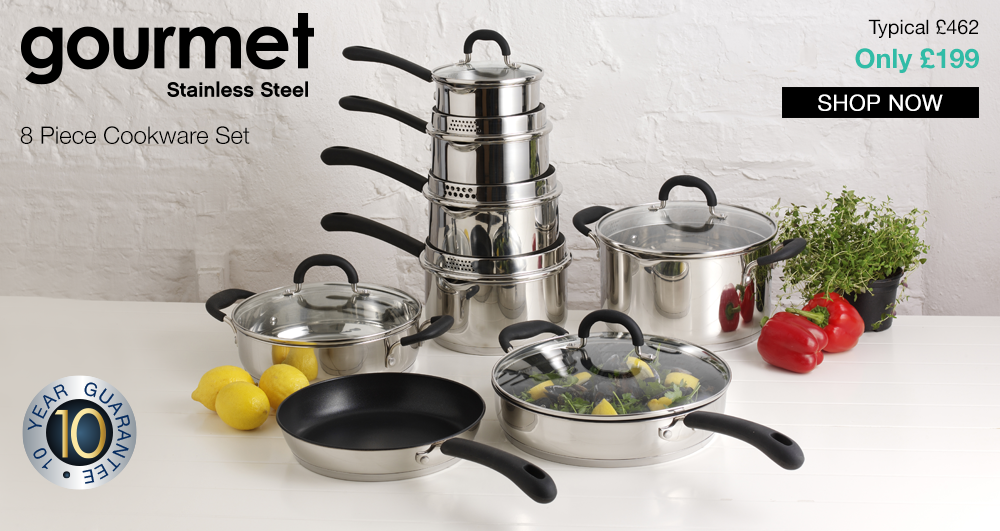
ProCook Gourmet Steel

Featuring our own ProCook Ultra non-stick cookware coating, and induction compatible, our Gourmet Steel range is crafted from 18/10 highest quality stainless steel to our own stringent specifications, Gourmet Steel offers incredible, versatile cookware at amazingly low prices.

ProCook Professional Steel

Our Professional Steel induction cookware benefit from superb 5 Star ProCook Ultra Plus triple layer non-stick coatings combined with the exceptional even heat distribution generated from commercial quality, 7mm impact bonded bases, making them suitable for cooking anything from omelettes and low fat stir fry dishes to bumper family breakfasts without worry of sticking or burning.

Thursday, 18 August 2016

Pan Sets: Pan Set Buying Guide: What To Look For

Are you about to buy a new pan set but not sure where to begin? Are there a hundred different dishes you would like to try, but you’re not quite sure which pan to do it in?

Here is a comprehensive list of pans every kitchen needs, and what they’re used for:

1.     Saucepan

Considered a staple in any pan set, saucepans are deep cooking pans, often accompanied by lids and used to cook foods with a high liquid content.  Saucepans come in a variety of sizes and materials, including stainless steel and aluminium, and can come with one or two handles, depending on their size, for ease of use.

Smaller, low-sided saucepans, also known as ‘milk pans’ are best for reducing sauces. Large pans are great for family-sized dishes, boiling and poaching techniques. Typical saucepan sizes range from 14cm in diameter to 28cm.

When purchasing your saucepans, consider the weight, handle material and pouring features.

2.     Frying Pan

The frying pan is a shallow pan with a long handle, used for cooking foods in hot fat or oil. These pans can be used for a wide range of tasks, from frying eggs to searing meat, and come in a variety of sizes and materials, similar to the saucepan.

3.     Griddle/ Skillet

The griddle is considered a healthier alternative to the frying pan. It is typically made from cast iron with a ridged, interior base ideal for searing meat and vegetables. This versatile piece of cookware can be used indoors on the hob or outside on the BBQ.

It is recommended that you oil the interior surface of your griddle pan before and after use to keep it at tits best and to only use hot water without detergent to clean it.


Griddles also come in stainless steel, aluminium and enamel.Great for steak, chops, and fish, griddles make a great addition to any pan set.

Thursday, 7 July 2016

How To Look After Your Cooks Knives

There is nothing quite as annoying as starting to chop your vegetables and finding that your knife is blunt.

No matter how expensive the knife, if it has been neglected and treated badly it will be useless.

Here are a few pointers on how to maintain your cook’s knife and guarantee an enjoyable prepping experience every time!

1.     Clean your cooks knives properly

Make sure to follow the cleaning instructions that come with your knife on purchase. You will typically be advised to wash your cook’s knife by handinstead of putting it in the dishwasher as the detergent, high heat and jostling may cause damage to the blade.

Wash your knife by hand using a soft cloth and warm soapy water, then rinse with hot water. For foods that are hardto remove, the knife should be soaked rather than scrubbed.

2.     Dry your cooks knives thoroughly

Particularly for knives made from carbon steel,it isimportant to prevent rust,although all knives should be properly dried before being stored. Dry your knife with a soft, clean cloth straight after rinsing to prevent mould and residue forming on your blades.

3.     Sharpen your cooks knivesregularly

Always keep your knives sharp. Depending on what your cook’s knife is made from,there is a wide range of sharpening tools available, including; whetstone, honing rod, ceramic wheel, V sharpener and ceramic sharpener.

If you are unsure what the difference is between each one, speak to a professional. All good cookware stores should be able to assist.

4.     Don’t sharpen your own knife unless you know what you are doing

If you are unsure how to sharpen your cook’sknife,ask a professional to do it for you or show you. You can take your knife into any cookware store and they will be happy to help. If you do sharpen your knife incorrectly,it is possible to damage the blade beyond repair.

5.     Store your cooks knivessafely

Storing your knife safely will not only prevent people from cutting themselves but will also protect the knife. If you keep your knives in a drawer, ensure they have a protective sheath on them at all times.

If you have a range of knives you use on a regular basis, it may be worth investing in a knife block, bristle block or magnetic rack. This will help to protect your knives from dents and marks and will also mean they are within easy reach.

6.     Choose your chopping surface carefully


Avoid using your knives on glass, granite, marble or stone. These surfaces will dull your knife blade more quickly than wood or plastic and can also damage the edge of your blade. We would recommend only using a wooden or plastic chopping board when using your cook’s knife.

Monday, 20 June 2016

Urban Rural: The Latest Kitchenware Trend

Home cooking has long been associated with traditional rural life and for a long time, kitchenware designs have strongly reflected these rural beginnings. Old-fashioned copper or cast iron pans, wooden spoons, timers and placemats have been a common sight, even in brand-new kitchenware for many years, with items being made to look like they had been handed down for generations. 

Today, with the urban lifestyle becoming much more prominent, cookware has been revived to suit the modern home. New kitchenware designs reflect more modern tastes; created with modern materials and visual styles in mind whilst maintaining a more traditional function, as perfected in rural homes.

With the popularity of Heston Blumenthal and his futuristic kitchenware and cooking gadgets, people are looking for kitchenware that reflects their city homes. Modern homes and kitchens have a much different feel to is found in the country, so new ranges that complement the sleek kitchen designs are a must have for urban living cooks. 

Kitchenware has been receiving an overdue update. We are now seeing a trend of “urban rural” which takes the old, traditional kitchenware tools of our family homes and transforms them into sleek and modern items that better fit within a city lifestyle. With this revival the urban household can now build up new traditions that bring the joys of rural life into city homes. 

This new kitchenware phenomenon has turned old equipment into modern tools. The bowl scrapers from our childhood baking cakes in our rural family homes are now made from light and flexible silicone. The fun shaped egg timers we all played with and used in our rural cooking are now shiny and sleek; made from stainless steel to match modern kitchenware and cookware. 

Instead of traditional wicker or the image of country watercolour paintings to place our dinner plates on, today’s placemats are made from acrylic with bare bold, vibrant twists on traditional designs like gingham. At heart, these new designs reflect their rural origins but now embrace the modern materials and tastes of the urban lifestyle.

Urban rural kitchenware is quickly making an impression on modern homeowners looking to build the perfect, family home in the big cities. It makes great use of modern materials, such as silicon and plastics, which are shaping both cooking and decorating. This unique combination of traditional tools with new materials is perfect for the keen home chef to match their kitchenware with their modern interior design.