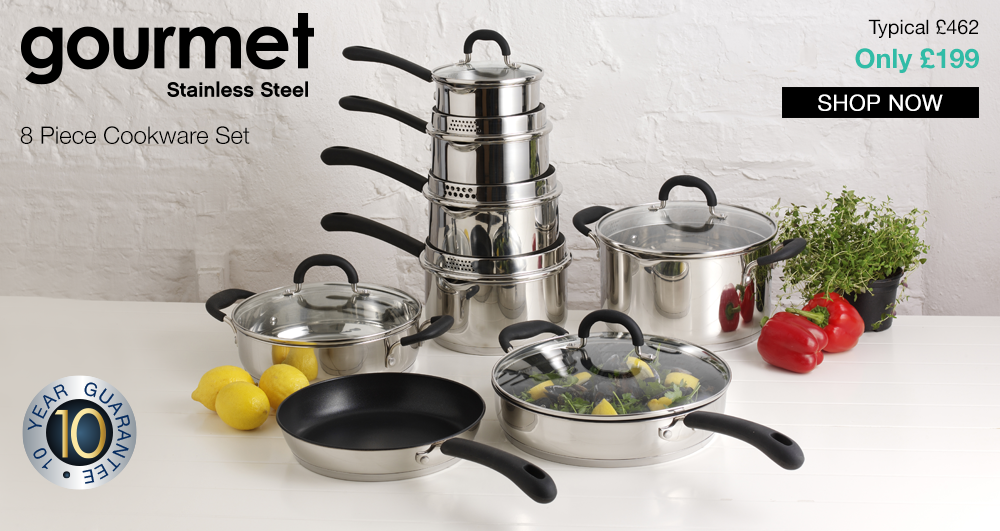
ProCook Gourmet Steel

Featuring our own ProCook Ultra non-stick cookware coating, and induction compatible, our Gourmet Steel range is crafted from 18/10 highest quality stainless steel to our own stringent specifications, Gourmet Steel offers incredible, versatile cookware at amazingly low prices.

ProCook Professional Steel

Our Professional Steel induction cookware benefit from superb 5 Star ProCook Ultra Plus triple layer non-stick coatings combined with the exceptional even heat distribution generated from commercial quality, 7mm impact bonded bases, making them suitable for cooking anything from omelettes and low fat stir fry dishes to bumper family breakfasts without worry of sticking or burning.

Wednesday, 21 May 2014

What is Induction Cooking?

Induction cookware and method of cooking has been around for many years; however it is in recent times that people are coming to grips with the hob type. Induction cooking holds many benefits which offer a better level of control when it comes to cooking as well as being safer and more efficient.

Gas and electric cookers heat pans by using their heated elements on the surface of their hobs. Induction cooking although has changed the way we think about cooking our food especially on an everyday basis. By using an electromagnetic field and ferromagnetic cookware induction cooking causes the pans to become the primary source of heat. This method holds quickly adjustable functions which creates evenly cooked dishes. Induction cooking holds a massive potential within the market which professionals are quickly coming to realise.

So what exactly is an induction hob and the need for special induction cookware?


Induction hob units look like a standard flat-top glass unit but they work in an entirely different way. Induction cooking uses electricity to produce a magnetic field which causes friction and heat in a metal vessel. As the special induction pans become the primary heat source the contents of the pan can be cooked quicker and more evenly. Induction cooking pans must be made of magnetic or ferrous metal material in order to work in conjunction with the stove. Pans made from steel, iron and nickel are usually suitable as long as a magnet will stick to them.

The Benefits of Induction Cooking

  • More Responsive with the magnetic technology
  • Easy Clean with a flat top
  • Safe Cooking with no flames or retained heated top

Thursday, 8 May 2014

The Benefits Of Cooking With Induction Pans

The Quiet Magic Of Induction Cooking


We have heard it all before. The microwave oven, invented shortly after the Second World War and first sold in 1947, was to be the panacea cooking solution for all cuisines and every home. That revolution, while enormous in its shaping of the modern British kitchen, turned out to be a coup for quick heating and reheating, rather than creating meals from scratch. Now that induction cooking is coming into the mainstream, is there a new candidate for the technology that changes the way we cook?

Key to the technology behind induction cooking is the relationship between the induction cooker and the induction pans used on it. It is a relationship that allows induction cookers to use a far lower total amount of energy than electric or gas cookers. While some everyday pans work well on an induction cooker, they must have a relatively high ferrous metal content or the technology won't work. Stainless steel, iron and cast iron pans all work. However, purpose made induction Cooking Pans are generally the best choice for this type of cooking. This is due to the unique way in which the induction cooker itself works.

It is a little known fact that induction cooking is actually an older idea than the concept of the microwave oven. A 1909 patent sketch still in existence shows an old fashioned kettle on a basic magnet unit, and while the modern technology is far, far more advance than this, the principle remains essentially the same. The induction cooker produces a magnetic frequency which causes the particles of the induction pans themselves to become heated, thus the need for a ferrous metal in the pan, and this in turn cooks the food. No heat is actually generated in the cooker itself, and no non-ferrous item will be heated if placed on the cooker.

This has some major benefits. The obvious advantage of a system that only heats induction pans is that it is far safer for use around children and for general safety. It is also a more efficient way of cooking, while still giving you all the cooking options of a normal hob unit. Induction cooking utensils can do everything that electric or gas can, it can just do it far more efficiently. Pans can be heated instantly. Spillovers of milk or stock won't burn. If only half a hob is used to heat a pan, the rest will effectively waste no energy.

Whether this is to be the next cooking revolution is yet to be seen. Considering the benefits and the fact that induction can do anything gas or electric hobs can, it has a fighting chance of being just that.

Friday, 18 April 2014

Get Ready For Summer Indoors - Buy A Griddle Pan!

With the days finally beginning to warm up and the evenings getting longer, thoughts inevitably begin to turn to the summer and for many people up and down the country, that means BBQs. However, as the warm weather is yet to fully kick in, the chilly Northern European climate remains a little nippy for outdoor cooking, even for the hardiest chefs. So for those that still want the delicious taste of summer without the risk of hypothermia, a great alternative to BBQs is to invest in a griddle pan, giving you all of the flavour of the outdoors, without the grey clouds and drizzle.

What are griddle pans?

Griddle pans usually have a cast iron or monastic surface and in general are large, heavy pans, with horizontal, raised rows along their length. The heavy weight of the pans allows them to reach the same high temperatures that occur during outdoor cooking, allowing chefs to recreate the taste and smell of a delicious BBQ. The raised surface creates tantalising grill marks on any food cooked in the pan and helps to ensure that you get that classic char-grilled taste. The surface also allows any fat from the meat to drain away, giving you a healthier alternative to frying.

What can you cook on a griddle pan?

If you’re the kind of chef who likes to experiment in the kitchen, then a griddle pan will make the perfect investment as it allows for a variety of foods to be cooked in a range of ways. Anything from burgers, chicken breasts, whole fish and sausages to courgettes, aubergines, asparagus and halloumi cheese can be cooked on a griddle pan, giving you delicious results whether you’re cooking up a meat feast or a veggie bonanza.

Caring for your griddle pan

As griddle pans do get extremely hot when on the hob, food can burn onto the surface to it’s important to clean your pan as soon as possible after use. If you’ve invested in a cast iron griddle pan, follow standard cast iron care instructions to ensure your surface stays in great condition. Bringing the taste of summer straight into your kitchen, griddle pans are the ideal option for BBQ enthusiasts and keen chefs alike, allowing them to enjoy the taste of the outdoors no matter how bad the weather is outside.