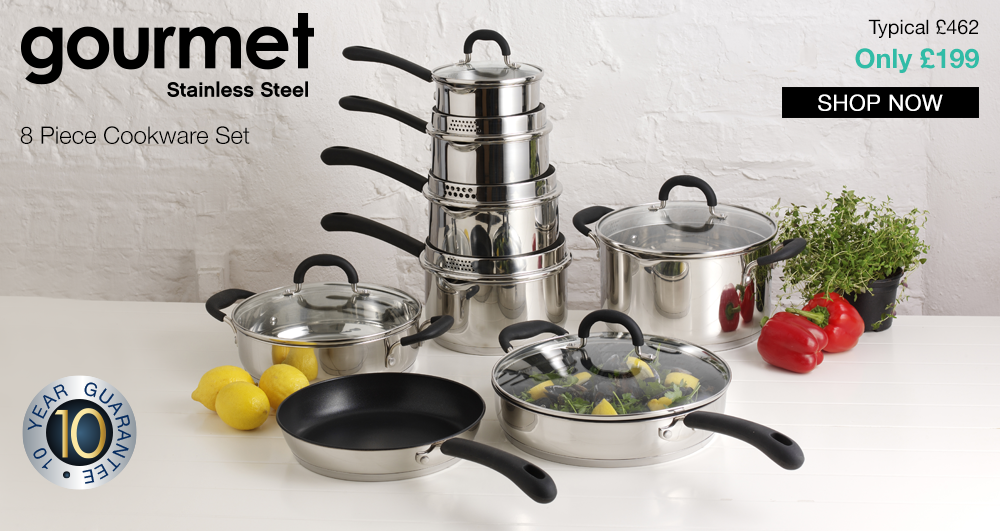
ProCook Gourmet Steel

Featuring our own ProCook Ultra non-stick cookware coating, and induction compatible, our Gourmet Steel range is crafted from 18/10 highest quality stainless steel to our own stringent specifications, Gourmet Steel offers incredible, versatile cookware at amazingly low prices.

ProCook Professional Steel

Our Professional Steel induction cookware benefit from superb 5 Star ProCook Ultra Plus triple layer non-stick coatings combined with the exceptional even heat distribution generated from commercial quality, 7mm impact bonded bases, making them suitable for cooking anything from omelettes and low fat stir fry dishes to bumper family breakfasts without worry of sticking or burning.

Wednesday, 14 September 2016

7 uses for your stockpots


Everyone loves a delicious, warming casserole or homemade gravy but what else can you use your stockpots for?

Here we look at some alternative uses to make the most of your stockpots and revolutionise your cooking.


1. Broths, stocks and soups

Stockpots are fantastic for making large batches of broth, stock and soups. Broth is predicted to be huge in 2015 so be one step ahead and master making your own. Individually frozen down soup portions make a great healthy lunch for work and homemade stock outshines store bought in any recipe.

Chicken broth, cooked chicken pieces and sweetcorn make a great warming meal that takes 2 minutes if you already have stock prepared.

2. Blanch vegetables

This is great for those green-fingered cooks out there. If you have a large quantity of vegetables and no have time to use them all before they turn bad, simply blanch in a stockpot and freeze.  Frozen vegetables make a great quick side dish to most meals.

 Avoid freezing vegetables with high water content such as courgettes, bean sprouts and radishes as these will go mushy.

3. Cook for a crowd

Invited friends for dinner but have no idea how you are going to cook for 10 with one oven and no prep space? Make anything from chilli to chicken chasseur in your stockpot. It will require one hob and a chopping board. Simple.

4. Use it as a water bath

A great use for your stockpot is for making small batches of jams, jellies and other preservatives. With slight modification turn your stockpot in to a water bath. Please note that this will only work for small quantities.

5. Pasta sauce

Is pasta your go to weeknight dinner? I so make sure to use homemade pasta sauce wherever possible. Make a large quantity in your stockpot, preserve the sauce in jars using the water bath technique and away you go.


6. Mulled wine & mulled cider

This tip might only come in to play at Christmas but that is still once a year!
Make your mulled wine or mulled cider in a stockpot and make sure there is plenty to go round.

7. Brining

This may not be the healthiest use for your stockpot but is certainly tasty. For those that are not sure what brining is here is a quick definition:

Brine is a salt and water solution used to preserve foods. In the case of meats, the solution can help increase the amount of liquid inside the meat cells; basically a way to make meat moister.

8. Soak beans and pulses

Soak dried beans and lentils in a stockpot overnight. The following day simply rinse and then simmer until cooked. These can then be frozen for later use.

9. Baking

If you are an avid home baker and tend to make large cakes such as wedding cakes you can use your stockpot to make up large batches of mixture. The tall sides will also prevent spillages and mess.

Thursday, 18 August 2016

Pan Sets: Pan Set Buying Guide: What To Look For

Are you about to buy a new pan set but not sure where to begin? Are there a hundred different dishes you would like to try, but you’re not quite sure which pan to do it in?

Here is a comprehensive list of pans every kitchen needs, and what they’re used for:

1.     Saucepan

Considered a staple in any pan set, saucepans are deep cooking pans, often accompanied by lids and used to cook foods with a high liquid content.  Saucepans come in a variety of sizes and materials, including stainless steel and aluminium, and can come with one or two handles, depending on their size, for ease of use.

Smaller, low-sided saucepans, also known as ‘milk pans’ are best for reducing sauces. Large pans are great for family-sized dishes, boiling and poaching techniques. Typical saucepan sizes range from 14cm in diameter to 28cm.

When purchasing your saucepans, consider the weight, handle material and pouring features.

2.     Frying Pan

The frying pan is a shallow pan with a long handle, used for cooking foods in hot fat or oil. These pans can be used for a wide range of tasks, from frying eggs to searing meat, and come in a variety of sizes and materials, similar to the saucepan.

3.     Griddle/ Skillet

The griddle is considered a healthier alternative to the frying pan. It is typically made from cast iron with a ridged, interior base ideal for searing meat and vegetables. This versatile piece of cookware can be used indoors on the hob or outside on the BBQ.

It is recommended that you oil the interior surface of your griddle pan before and after use to keep it at tits best and to only use hot water without detergent to clean it.


Griddles also come in stainless steel, aluminium and enamel.Great for steak, chops, and fish, griddles make a great addition to any pan set.

Thursday, 7 July 2016

How To Look After Your Cooks Knives

There is nothing quite as annoying as starting to chop your vegetables and finding that your knife is blunt.

No matter how expensive the knife, if it has been neglected and treated badly it will be useless.

Here are a few pointers on how to maintain your cook’s knife and guarantee an enjoyable prepping experience every time!

1.     Clean your cooks knives properly

Make sure to follow the cleaning instructions that come with your knife on purchase. You will typically be advised to wash your cook’s knife by handinstead of putting it in the dishwasher as the detergent, high heat and jostling may cause damage to the blade.

Wash your knife by hand using a soft cloth and warm soapy water, then rinse with hot water. For foods that are hardto remove, the knife should be soaked rather than scrubbed.

2.     Dry your cooks knives thoroughly

Particularly for knives made from carbon steel,it isimportant to prevent rust,although all knives should be properly dried before being stored. Dry your knife with a soft, clean cloth straight after rinsing to prevent mould and residue forming on your blades.

3.     Sharpen your cooks knivesregularly

Always keep your knives sharp. Depending on what your cook’s knife is made from,there is a wide range of sharpening tools available, including; whetstone, honing rod, ceramic wheel, V sharpener and ceramic sharpener.

If you are unsure what the difference is between each one, speak to a professional. All good cookware stores should be able to assist.

4.     Don’t sharpen your own knife unless you know what you are doing

If you are unsure how to sharpen your cook’sknife,ask a professional to do it for you or show you. You can take your knife into any cookware store and they will be happy to help. If you do sharpen your knife incorrectly,it is possible to damage the blade beyond repair.

5.     Store your cooks knivessafely

Storing your knife safely will not only prevent people from cutting themselves but will also protect the knife. If you keep your knives in a drawer, ensure they have a protective sheath on them at all times.

If you have a range of knives you use on a regular basis, it may be worth investing in a knife block, bristle block or magnetic rack. This will help to protect your knives from dents and marks and will also mean they are within easy reach.

6.     Choose your chopping surface carefully


Avoid using your knives on glass, granite, marble or stone. These surfaces will dull your knife blade more quickly than wood or plastic and can also damage the edge of your blade. We would recommend only using a wooden or plastic chopping board when using your cook’s knife.